

AMS 4928 - Ti-6Al-4V Titanium Bar, Wire, Forgings & Rings (Annealed)
What is AMS 4928?
Available Forms and Typical Stocked Sizes
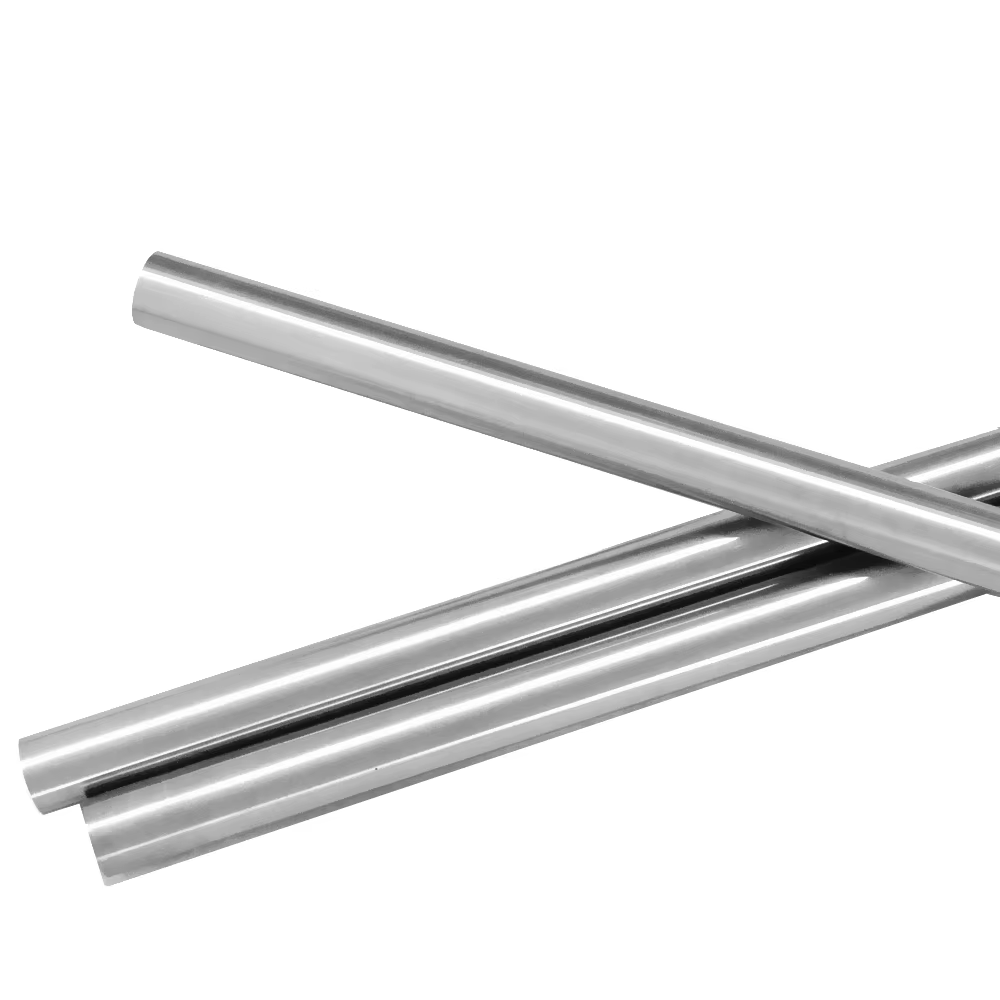
6Al-4V per AMS 4928 Round Bar Diameter ranges from 0.1875″ to 20.00″dia.
6Al-4V per AMS 4928 Flat Bar varies in thickness and width. For a quote please email go to our Request A Quote page.
Applications of AMS 4928 Ti-6Al-4V Titanium
Aerospace & Defense Applications
- Jet engine compressor blades, discs, and rings
- Engine shafts, hubs, and casings
- Aircraft structural frames and bulkheads
- Landing gear components and actuators
- High-strength aerospace fasteners and fittings
- Helicopter rotor hubs and transmission components
- Military airframe structures (F-35, F-22, and other platforms)
- Pressure vessels and hydraulic system components
Medical & Biomedical Applications
- Orthopedic implants (hip, knee, spine)
- Dental implant components and abutments
- Surgical instruments and tools
- Prosthetic devices (ELI grade AMS 4930 preferred for implants)
Industrial & Marine Applications
- Chemical processing equipment and reactor vessels
- Marine hardware and ship propeller components
- Oil and gas industry downhole equipment
- Formula 1 and motorsport performance components
- High-performance automotive components
- Sports equipment requiring strength at minimum weight
Chemical Composition - AMS 4928
The following chemical composition limits are specified in AMS 4928 for Ti-6Al-4V (UNS R56400):
| Element | Symbol | Minimum % | Maximum % |
|---|---|---|---|
| Aluminum | Al | 5.50 | 6.75 |
| Vanadium | V | 3.50 | 4.50 |
| Iron | Fe | - | 0.30 |
| Oxygen | O | - | 0.20 |
| Carbon | C | - | 0.08 |
| Nitrogen | N | - | 0.05 |
| Hydrogen | H | - | 0.0125 |
| Yttrium | Y | - | 0.005 |
| Other (each) | - | - | 0.10 |
| Other (total) | - | - | 0.40 |
| Titanium | Ti | Balance | - |
Aluminum stabilizes the alpha phase and increases strength at elevated temperatures. Vanadium stabilizes the beta phase and improves room-temperature ductility and response to heat treatment. The tight controls on oxygen, iron, carbon, and nitrogen ensure consistent mechanical properties and toughness across heats.
Mechanical Properties - AMS 4928
The minimum mechanical properties required by AMS 4928 vary by cross-section size:
| Size (Diameter or Least Distance Between Parallel Sides) | Tensile Strength Min | Yield Strength Min (0.2% offset) | Elongation in 2" | Reduction of Area |
|---|---|---|---|---|
| Up to and including 2.000 in. (50.80 mm) | 135 ksi (931 MPa) | 125 ksi (862 MPa) | 10% min | 25% min |
| Over 2.000 in. to 4.000 in. (50.80–101.60 mm) | 130 ksi (896 MPa) | 120 ksi (827 MPa) | 10% min | 25% min |
| Over 4.000 in. to 6.000 in. (101.60–152.40 mm) | 130 ksi (896 MPa) | 120 ksi (827 MPa) | 10% min | 25% min |
Physical Properties
| Property | Value (Imperial) | Value (Metric) |
|---|---|---|
| Density | 0.160 lb/in³ | 4.43 g/cm³ |
| Weight vs. Steel | ~57% the weight of steel | ~57% the weight of steel |
| Melting Range | 2,995°F–3,020°F | 1,646°C–1,660°C |
| Modulus of Elasticity | 16.5 × 10⁶ psi | 114 GPa |
| Thermal Conductivity | 4.2 BTU/(hr·ft·°F) | 7.2 W/(m·K) |
| Coefficient of Thermal Expansion | 4.9 × 10⁻⁶ /°F | 8.8 × 10⁻⁶ /°C |
| Specific Heat | 0.13 BTU/(lb·°F) | 560 J/(kg·K) |
| Service Temperature Range | -350°F to 750°F | -210°C to 400°C |
Approved Mill Producers
Machining of AMS 4928
- Cutting speeds: Low (50–100 SFM for carbide tooling) – titanium has low thermal conductivity and heat concentrates at the cutting edge
- Feeds: Heavy feeds preferred over high speeds
- Tooling: Carbide or cobalt-based HSS; sharp, positive-rake tools
- Coolant: Non-chlorinated cutting fluid required; flood coolant recommended. Chlorinated fluids can cause stress corrosion cracking in titanium.
- Chip control: Titanium chips are tough and stringy; chip breakers are important
- Workholding: Secure clamping required to prevent chatter and tool deflection
- Built-up edge: Use fresh, sharp tools; titanium is prone to galling and work hardening at the cut surface
Weldability of AMS 4928
- TIG (GTAW): Primary process; argon or helium shielding required for weld pool, back purge, and trailing shield
- MIG (GMAW): Used for higher deposition rate applications with inert shielding
- Electron Beam (EBW): Used in vacuum environments for critical aerospace welds
- Spot, Seam, Flash, Pressure: Applicable depending on joint design and application
- Post-weld treatment: Stress relief anneal at 1,000°F–1,100°F (538°C–593°C) restores ductility in heat-affected zone
- Contamination: Titanium is highly reactive above 500°F (260°C); oxygen, nitrogen, and hydrogen contamination causes embrittlement – maintain shielding gas coverage until weld cools below 400°F (204°C)
Safe Handling of Titanium Alloys
Pyrophoric conditions
- Titanium powder, grinding fines, turnings, and chips can ignite above 480°F (250°C) — and in some conditions at room temperature if finely divided
- Dry chlorine, red fuming nitric acid, and certain oxidizing agents can cause violent reaction with titanium
Safety precautions
- Handle machining chips and turnings in small quantities; avoid accumulation
- Electrically ground machining equipment to prevent static discharge / sparks
- Use non-sparking tools (monel, aluminum, stainless steel) near titanium fines
- Store chips and turnings in closed metal containers
- No smoking in areas where titanium chips are present
Cross-Reference Specifications

Annealed Grade 5
Annealed and Heat Treatable Grade 5
Same alloy and product forms as AMS 4928, but with annealed delivery + option to heat treat to higher strength levels. Not direct substitutes – require engineering review if switching from AMS 4928.

Annealed ELI Grade 23 Specifications

Solution Treated and Aged Specifications

Boeing Material Specifications

McDonnell Douglas Material Specifications

Lockheed Martin Material Specifications

Sikorsky Aircraft Specifications
Other OEM Specifications

Full 6Al-4V Titanium Specifications List
Want to see the complete specifications for 6Al-4V titanium used in aerospace, defense, and industrial applications? Click the button to access the full specifications list, covering all major standards and forms.
Trade Names and Equivalent Designations
| Designation | System | Notes |
|---|---|---|
| Ti-6Al-4V | Common name | Most widely used international notation |
| Ti 6-4 | Common shorthand | Used in procurement and machining |
| Ti64 / Ti-64 | Shorthand | Common in engineering and academic literature |
| Grade 5 Titanium | ASTM designation | Per ASTM B265/B348 classification |
| ASTM Grade 5 | ASTM formal | Used in ASTM specifications |
| UNS R56400 | UNS (Unified Numbering System) | Standard material identifier in North America |
| DIN 3.7165 | DIN (German standard) | European designation |
| 3.7165 | Material number | German/European shorthand |
| TC4 | Chinese designation | GB/T standard designation |
| SAE AMS 4928 | Full SAE designation | Used in procurement documents |
| Alpha-Beta Titanium | Phase classification | Describes microstructure |
| 6-4 Titanium | Industry shorthand | Common in aerospace sourcing |
| Titan Grade 5 | EN notation | European commercial designation |
Why Source AMS 4928 from Fighter Jet Metals?
Full mill certifications on every order
Heat number, lot number, chemical composition certifications, and mechanical test reports provided with each shipment
Complete heat-lot traceability
Full chain-of-custody documentation from mill to your door
Aerospace-grade sourcing
Material from AS9100-certified mills only
OEM specification support
Stock and supply to Boeing BMS, Lockheed MMS, Sikorsky SS, and McDonnell Douglas DMS requirements
Rapid quote response
Fast RFQ turnaround with responsive support for aerospace, defense, and high-performance metal procurement requirements.
Custom processing available
Saw cutting, inspection, test witnessing coordination

Certified Material for Critical Service
Materials supplied in 6Al-4V titanium must meet strict aerospace certification and traceability requirements. Fighter Jet Metals supports sourcing across a wide range of AMS, MIL, and OEM specifications, ensuring compliance with industry standards.
All material is supplied with full mill certifications, complete heat-lot traceability, and detailed documentation. This ensures reliability and suitability for safety-critical aerospace, defense, and high-performance engineering applications.